
Global low fertility has become an undeniable social issue, posing severe challenges to socio-economic sustainability in countries ranging from Japan, South Korea, and Europe to China. In response, governments have swiftly introduced “technical” solutions—financial subsidies, tax incentives, extended maternity leave, and childcare services. To policymakers, this is an economic lever: reduce the cost of child-rearing to stimulate the desire to give birth.
However, these grand blueprints often face unexpected indifference or even pushback from the public. This suggests that fertility is not merely a matter of economic cost, but a complex issue involving life planning and individual narratives.
Pre-modern Narratives: Sacred Long-term Interests
Before the scientific and industrial revolutions, fertility was deeply rooted in religious, cultural, and familial narratives. Children were viewed as sacred gifts, carrying the weight of family lineage and the preservation of faith.

The Cultural Foundations
- Confucianism: The Classic of Filial Piety states: “Our bodies—to every hair and bit of skin—are received by us from our parents… To establish oneself, follow the Way, and spread one’s fame to future generations to glorify one’s parents is the ultimate goal of filial piety”. Here, child-rearing is the ultimate life goal, and a child’s success is the parents’ glory.
- Global Religions: In Islam, children are seen as a blessing from Allah and a religious duty. The Christian Bible commands to “be fruitful and multiply,” linking fertility to the stewardship of the earth. In Hinduism, fertility ensures the continuation of ancestral rites and the peace of ancestral souls.
Key Characteristics of Pre-modern Narratives:
- Sacredness: Fertility is a blessed act, not a personal choice or economic decision.
- Long-term Orientation: It is a way to combat death and ensure the eternal continuation of life and faith.
- Collective Subject: The individual will is subordinate to the needs of the family or religion.
Industrial-Era Narratives: Economic Instruments of the State
In the 20th century, as scientific and industrial waves swept the globe, traditional and religious influences waned. Tool-based rationality became the dominant force in public affairs, shifting fertility from a “sacred” narrative to a “secular” one.

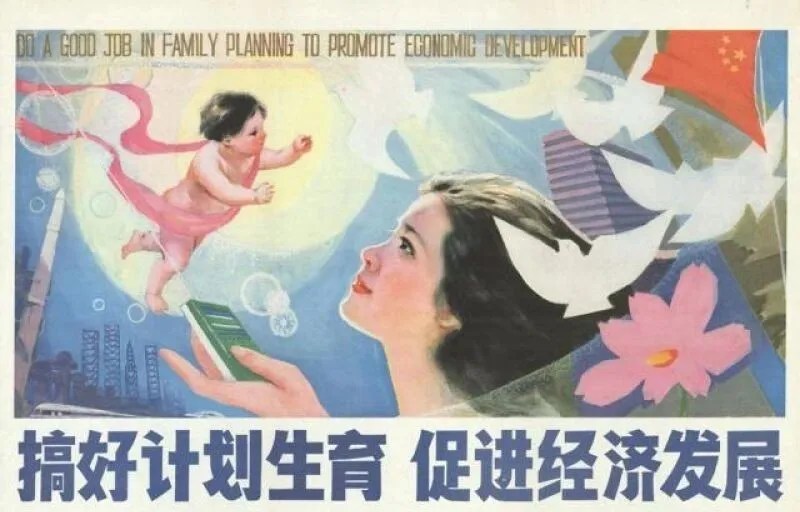
The mid-20th-century rise of “Population Explosion” theories led many Asian countries to view fertility policies as tools for economic development. Birth control was used to alleviate resource pressure and increase per-capita output. Slogans like “Practice family planning, promote economic development” stripped fertility of its sacredness, making it utilitarian.
Key Messages of this Era:
- Economic Benefit: Having many children was no longer a blessing but a burden linked to poverty.
- Negative Framing: Children became “debts” or resource consumers rather than “gifts”.
- Individual Subject: As the extended family dissolved, fertility became a rational choice for the nuclear family to weigh costs and benefits.
The Contemporary Dilemma: Narrative Rupture and Value Conflict
While the “limit births” narrative has faded, the underlying view of fertility as “secular, personal, and economically driven” remains deeply ingrained in the modern psyche. When governments pivot to “encouraging” births, they face a narrative clash in three dimensions:
1. Conceptual Conflict for the Main Fertile Population
Most current parents were born during the era of birth limits. Their values were shaped by narratives highlighting the negative aspects of high fertility, such as overpopulation and the high cost of living. Sudden policy shifts create cognitive dissonance.
2. Misalignment of Interests
During the restrictive era, the state’s interest (economic growth) and the individual’s interest (becoming wealthy by having fewer children) were aligned. Now, they are in opposition: the state wants more births to solve labor shortages and aging, while the individual faces immense economic, time, and career costs. Slogans like “Give birth for the country” often feel like moral kidnapping.
3. Expectations vs. Reality
Pre-modern narratives balanced the invisible “long-term benefit” of lineage through a transcendence-based belief system. Contemporary society emphasizes short-term, secular benefits. Within this utilitarian framework, government subsidies often feel like a “drop in the bucket” compared to the immediate sacrifices of sleep, career, and finances.
The Utilitarian Trap and the Missing Narrative
Most current pro-natalist policies remain within a technical and utilitarian framework—essentially “bargaining” with the public. This model fails because:
- Economic limits: Relying solely on financial incentives is unsustainable and costly.
- Lack of Depth: It ignores that fertility involves emotions, values, and social identity.

The core issue is that highly industrialized societies lack a persuasive public narrative. Traditional faith-based stories have lost their foundation, and new stories that respond to the complexities of modern life have yet to be formed.
Conclusion and Outlook
Technical policies alone are insufficient. A sustainable policy requires a new public narrative that addresses modern anxieties. This might involve:
- Restoring non-utilitarian value: Exploring fertility’s role in personal growth and emotional connection.
- New Individual-State relations: Linking personal pursuit of a better life with macro-social goals.
- Honesty about parenting: Acknowledging the hardships of child-rearing and providing genuine empathy and support rather than empty slogans.
How we tell the “story of birth” in a way that regains its charm and value is the ultimate challenge for policymakers and society alike.
 Jonny Fan
Leave a comment